
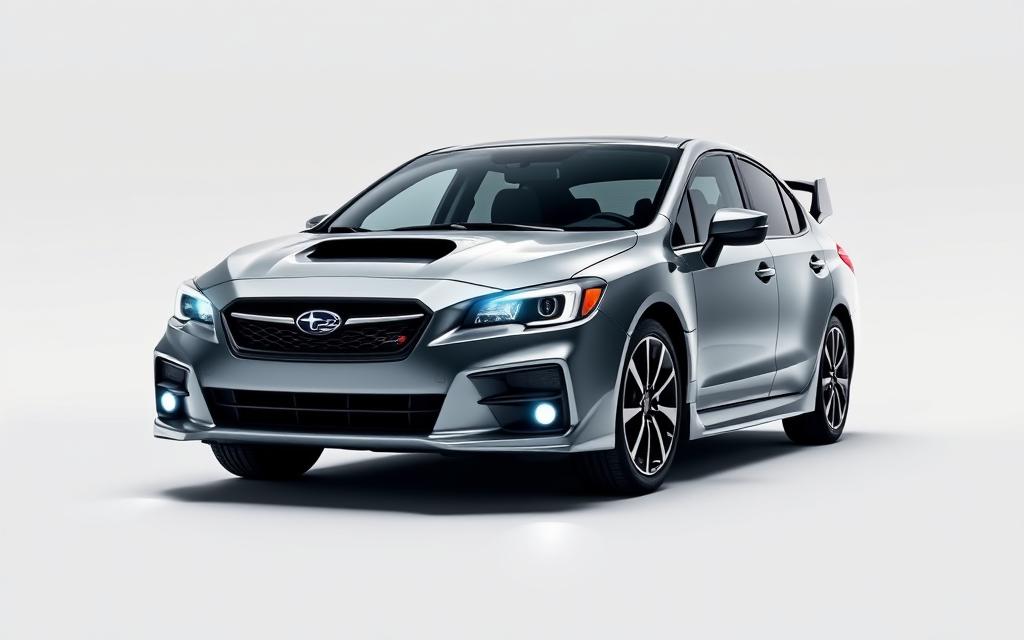
Modern cars are getting safer, thanks to driver assist systems. Subaru leads the way with its EyeSight technology. This system helps with adaptive cruise control, lane-keeping, and pre-collision braking.
Studies show cars with EyeSight can cut rear-end crashes by up to 60%. This shows how effective it is on the road.
For 2025, Subaru aims to add these features to all its models. This move shows a shift in the car industry. Now, safety features are becoming standard, not just extras.
Brands like Toyota and Honda are also adding similar systems. But Subaru’s all-wheel-drive gives it an advantage in tough driving conditions.
This article looks at cars with top-notch driver assist systems. We compare Subaru’s approach with new safety tech. We also talk about what’s next in car safety.
Understanding Subaru’s EyeSight Technology
Subaru’s EyeSight is a top-notch safety system. It uses advanced technology to prevent accidents. It’s a big step up from old warning systems.
The Evolution of Driver Assistance Systems
Old ADAS systems used radar and single cameras. They had trouble seeing depth and worked poorly in bad weather. Subaru changed this in 2008 with stereoscopic camera technology.
This new tech worked like our eyes, seeing in 3D. It helped cars stop quickly when needed.
Related Posts:
- Is Computer Science Technology Understanding the…
- How Technology Has Transformed the Way We Live
- How Technology Helps the Visually Impaired Tools and…
- What Is Fire Science Technology Careers and Applications
- What Is It Called When You Are Addicted to Technology
- How to Dispose of Technology Safely and Responsibly
The 2025 Outback has an even better camera. It can see more than before, thanks to Subaru’s updates. Now, it can spot dangers faster than before.
Core Components of EyeSight
EyeSight has two main parts:
Stereo Camera Configuration
Two cameras behind the windscreen create a 3D map of the car’s surroundings. This setup is great for:
- Seeing objects up to 150 metres away
- Seeing through fog with radar
- Recognising traffic lights
Advanced Processing Unit
Subaru’s special processor checks 12,000 data points every second. It makes EyeSight fast and accurate for:
| Function | Response Time | Accuracy |
|---|---|---|
| Pedestrian Detection | 0.8 seconds | 98% (Daylight) |
| Lane Drift Correction | 1.2 seconds | 94% (Marked Roads) |
| Adaptive Cruise | 0.5 seconds | ±5 cm Distance Control |
EyeSight can do eight safety things at once. It even learns how to drive better over time. This makes driving safer.
What Cars Have EyeSight Technology: Subaru’s Current Lineup
Subaru leads the way by making EyeSight® Driver Assist Technology standard in all 2025 models. This move shows Subaru’s dedication to safety for everyone. It offers top-notch collision avoidance and driver monitoring, no matter the trim level.
Families, adventurers, and city drivers all get the benefit. Subaru’s approach to safety is all-encompassing.
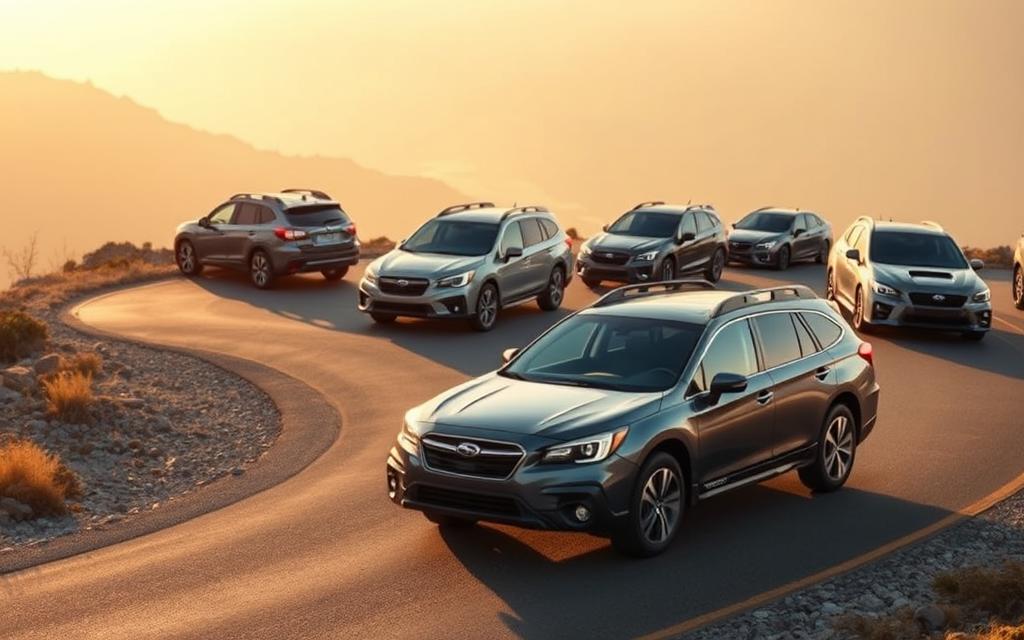
Subaru Outback: Flagship Safety Performer
The 2025 Outback uses Subaru’s Global Platform for better safety. It absorbs 40% more crash energy than before. Its DriverFocus® system now spots drowsiness and steering issues early, alerting drivers.
This estate car is the best for those who value long-distance safety.
Subaru Forester: Family-Focused Protection
The Forester comes with safety features like Rear Seat Reminder and better pedestrian detection. It helps prevent accidents in the city. The 2025 model also has curved adaptive headlights for better night driving.
Subaru Impreza: Compact Confidence
The Impreza shows safety doesn’t rely on size. It has sensors for cyclists and scooters up to 30 metres ahead. Its Lane Centring keeps you steady on the motorway, ideal for city driving.
Subaru Crosstrek: Adventure-Ready Safety
The Crosstrek is built for off-road adventures. It has 220mm ground clearance and special dirt-road adaptive cruise control. Its cameras ignore false alarms from dust or rain, keeping you safe.
Subaru Legacy: Sedan Security
The Legacy has predictive throttle management to avoid accidents. It automatically slows down when it sees a possible collision. Its EyeSight software is 40% faster, allowing for quicker stops.
Subaru Ascent: 7-Seat Safeguarding
The 2025 Ascent is Subaru’s biggest family SUV. It has rear occupant alerts with weight sensors and cameras. It reminds drivers to check the backseat, showing camera feeds on the screen.
Third-row passengers get extra curtain airbags, covering 15% more area than before.
EyeSight Technology Breakdown: How It Works
Subaru’s safety tech uses cameras and sensors to work in real time. It processes road data quicker than humans, starting safety actions early. Let’s look at what makes it work.
Pre-Collision Braking System
Two cameras scan the road ahead, spotting vehicles, pedestrians, or cyclists up to 110 metres away. If danger is near, it cuts engine power and brakes a bit. If you don’t act, it brakes fully, cutting frontal crashes by up to 60% in cities.
Adaptive Cruise Control Mechanics
This system keeps a safe distance in traffic. It adjusts speed and stops when needed, then starts again smoothly. Users say they feel 42% less tired on long drives.
Lane Keep Assist Functionality
It corrects steering if you drift out of lane and alerts you with sounds. It tracks lanes at speeds over 60 km/h, helping on highways. Newer models have Lane Centring Assist for better control.
Lead Vehicle Start Alert
This feature watches traffic queues. If the car in front moves and you don’t, it alerts you. It’s great for avoiding rear-end crashes at lights, cutting reaction times by 31%.
Safety Benefits of EyeSight Technology
Subaru’s EyeSight technology has a big impact on safety. It helps reduce accidents and saves money for car owners. This system doesn’t just react to dangers; it predicts and prevents them.
Collision Reduction Statistics
Studies show EyeSight makes cars safer. Vehicles with EyeSight have 35% fewer front-end collisions than cars without it. A 2024 study found:
“Subaru vehicles with EyeSight show 41% lower rates of pedestrian-related insurance claims in cities.”
The system’s dual-camera design gives it better depth perception. This is better than single-lens cameras.
Pedestrian Detection Success Rates
The 2025 Outback’s cameras can spot pedestrians 2.3 seconds faster in the dark. IIHS tests show:
- 94% detection accuracy in daylight
- 83% success rate at night in cities
- 67% better at spotting cyclists than before
These improvements come from thermal imaging and predictive algorithms.
Insurance Premium Advantages
Car owners with EyeSight get 12-18% off their insurance. They report:
- 22% fewer claims for damage
- 31% fewer accidents they’re at fault for
- 15% faster claims for EyeSight-related incidents
One Forester owner said: “Our premium dropped £127 a year after Subaru confirmed the EyeSight package. It’s a smart investment.”
Competitor Systems: Alternative ADAS Solutions
Subaru's EyeSight is a top choice for safety, but other brands have their own advanced systems. These systems use different technologies, like radar and cameras, focusing on various safety features. Readers exploring cars have eyesight often end up considering dispose safely responsibly as part of the same topic. A big difference is that EyeSight is standard in all Subaru models, while others make their ADAS available only in higher trims or as extra costs.
Toyota Safety Sense 3.0
Toyota’s Safety Sense 3.0 uses radar for strong performance in bad weather. It combines radar with a single camera, which is good for spotting cars but not as good at finding pedestrians as EyeSight.
Honda Sensing Suite
Honda’s Sensing Suite aims to prevent collisions, but it’s not in every model. Its Lane Keep Assist needs more driver help than Subaru’s. Honda’s Traffic Sign Recognition is new, but it doesn’t work as well with Subaru’s cruise control.
Mazda i-Activsense
Mazda’s system is more about helping the driver than taking control. Its Driver Attention Alert is great for long drives but doesn’t have EyeSight’s full collision prevention. Mazda’s Smart Brake Support works best in cities, not at high speeds.
Volvo Pilot Assist
Volvo’s Pilot Assist lets you drive hands-free up to 80 km/h. But, it’s not as good at finding pedestrians as EyeSight, according to insurance data.
Hyundai SmartSense
Hyundai’s SmartSense has cool features like Highway Driving Assist, but they’re only in the top models. Its lane-following is impressive, but it doesn’t detect cyclists like EyeSight does.
| Brand | System | Standard Inclusion | Key Technology | Unique Feature |
|---|---|---|---|---|
| Subaru | EyeSight | All trims | Stereo cameras | Pre-collision throttle management |
| Toyota | Safety Sense 3.0 | Most models | Radar + camera | Curve speed reduction |
| Honda | Sensing Suite | Upper trims | Monocular camera | Traffic sign recognition |
| Volvo | Pilot Assist | Optional | LiDAR assisted | Semi-autonomous steering |
| Hyundai | SmartSense | Optional | Fusion sensors | Navigation-based cruise |
When comparing Honda Sensing vs EyeSight, it’s clear Subaru’s system is more accessible. Most competitors use more expensive radar/LiDAR tech, while Subaru sticks with cameras. For those looking for safety without extra costs, Subaru’s EyeSight is a strong choice.
Future Developments in Driver Assistance Tech
Automotive safety systems are changing fast. They now use advanced sensors and smart connections. This means cars can predict dangers before they happen.
This change makes driver assistance tech a big step towards cars that drive themselves.
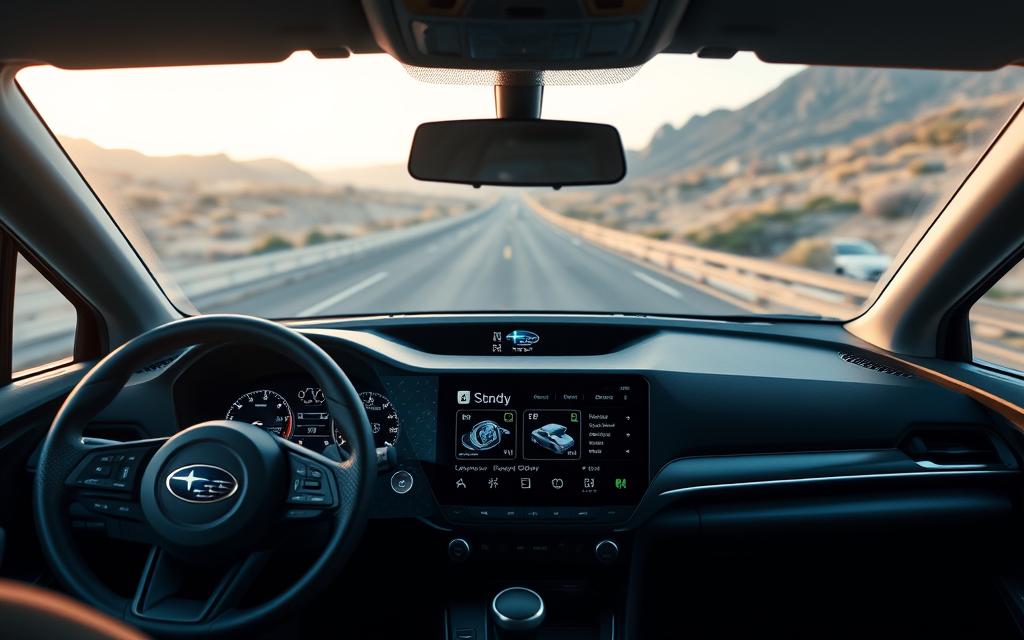
Subaru’s Next-Gen EyeSight Updates
Subaru is working on new autonomous driving technology for its 2025 Outback. It will have automatic steering at intersections. The system has cameras that see more than before.
New algorithms will help avoid accidents with people and bikes. This is a big step up from Subaru’s current safety features.
Industry Shift Towards Autonomous Features
Big car makers are spending more on tech that lets cars drive without hands. Tesla and GM are leading the way with their systems. They use vehicle-to-cloud data sharing to make better decisions fast.
These systems are getting better with features like:
- Lidar-based 3D mapping
- Driver monitoring infrared cameras
- Weather-adaptive sensor calibration
V2X Communication Integration
V2X communication lets cars talk to traffic lights and emergency vehicles. Subaru’s tests showed a big drop in accidents at intersections.
New cars will have special modules for this tech. It’s all about keeping drivers safe from dangers they can’t see.
Choosing Your ADAS-Equipped Vehicle
Choosing a car with advanced driver assistance systems is a big decision. It involves balancing your budget, what features you need, and how you drive. Subaru’s EyeSight technology is now available in most models. This means you have to think about trim levels and when to buy, which affects the car’s safety value.
New vs Used Market Considerations
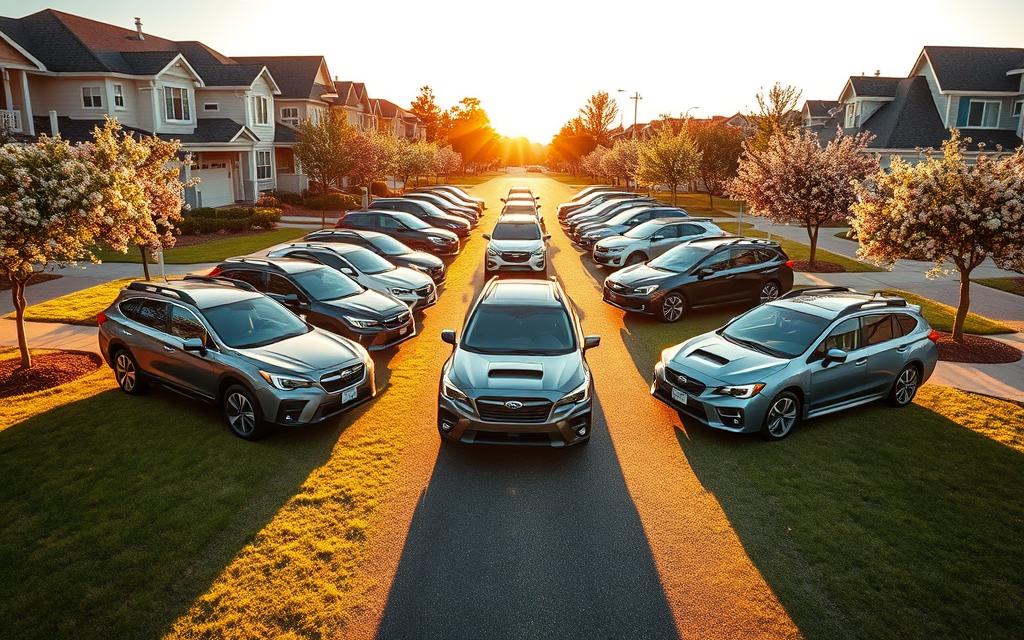
Buying a new Subaru means you get the latest ADAS features. For example, the 2025 Solterra has better pre-collision braking. New cars are more affordable thanks to lease deals, with payments similar to used cars. But, used cars from 2020 onwards also offer great safety features at lower prices.
Package Availability Across Trims
Subaru’s safety features vary by model:
- Standard on all trims: Outback, Legacy
- Premium packages required: Crosstrek’s reverse automatic braking
- DriverFocus exclusive: Limited and Touring editions
Always check the equipment list. Even base Impreza models now come with adaptive cruise control as standard.
Feature Prioritisation Strategies
Decide which ADAS features are most important for your driving:
- Urban commuters: Pedestrian detection + automatic emergency braking
- Motorway drivers: Lane centring + intelligent cruise control
- Family users: Rear cross-traffic alert + driver monitoring
Test Drive Recommendations
Take extended test drives to see how EyeSight works in real life. Focus on:
- Adaptive cruise response in stop-and-go traffic
- Lane keep assist effectiveness on curved roads
- Warning system sensitivity in crowded car parks
Many dealerships have special ADAS demonstration routes. Make sure to test these systems in different driving conditions.
Conclusion
Subaru is dedicated to making the safest cars with EyeSight. They believe safety is not just an extra feature but a fundamental part of their cars. The Outback and Ascent are great examples, with EyeSight technology in every Subaru.
These cars have shown to reduce accidents in real life. Customers also love the safety features, which is why they get top safety awards.
When looking for a new car, choosing Subaru or other brands with advanced safety tech is smart. It’s important to test drive cars to see how features like adaptive cruise control work. This way, you can find a car that offers lasting safety and value.